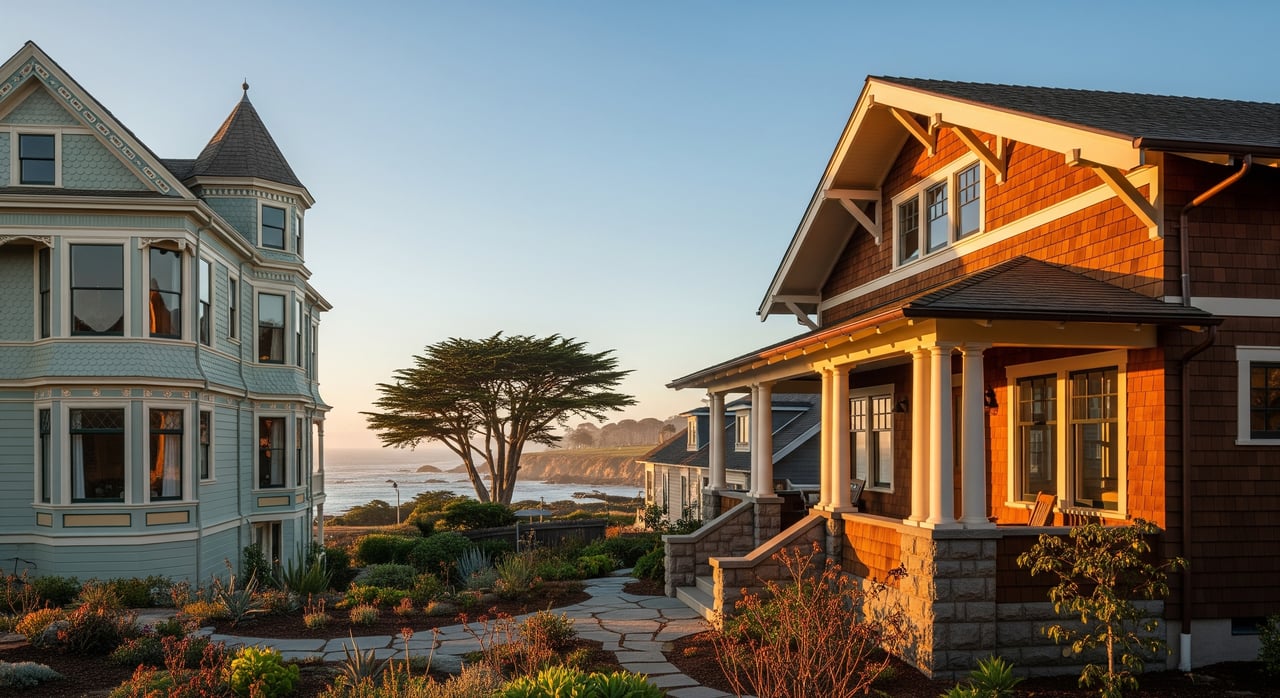
Craving the romance of a painted Victorian or the warmth of a Craftsman bungalow in Pacific Grove, but not sure which fits you best? You are not alone. Many buyers and sellers weigh charm, maintenance, and resale when choosing between these two beloved styles. In this guide, you will learn how to spot each style at a glance, what the coastal climate means for upkeep, how updates influence value, and what to consider for permits and historic review. Let’s dive in.
Quick style snapshot
How to spot a Victorian
Victorians in Pacific Grove often show asymmetrical shapes, bay windows, and sometimes a turret on larger homes. You will see ornate trim, decorative shingles, and steep roofs with intersecting gables. Wrap-around or prominent front porches are common, and original wood siding is typical. Inside, rooms tend to be more formal and separated, with higher ceilings and a focal staircase.
How to spot a Craftsman
Craftsman bungalows favor simplicity and natural materials. Look for low-pitched gabled roofs, wide eaves with exposed rafters, and porches under the main roof with tapered square columns on stone or stucco bases. Windows are often grouped, with multi-pane uppers over single-pane lowers. Interiors lean more open for the era, with a central fireplace and built-in cabinetry like bookcases and window seats.
Floor plans and feel
Victorians often deliver distinct rooms, including a parlor, dining room, and a formal entry. Ceilings can reach 9 to 12 feet in larger examples. This layout can feel elegant and quiet, especially if you prefer separate spaces for entertaining and daily living. Many Pacific Grove Victorians range from compact cottages to larger multi-story homes near the historic core.
Craftsman homes typically emphasize an open flow between the living and dining areas. You get a comfortable scale, lower ceiling heights, and built-ins that make daily life efficient. In Pacific Grove, most Craftsman bungalows are one or one-and-a-half stories with 2 to 3 bedrooms and a generous front porch that extends living space outdoors.
What the coast means for upkeep
Pacific Grove’s marine climate brings salt air, humidity, wind-driven rain, and strong sun. Whether you choose Victorian or Craftsman, materials and maintenance matter as much as style.
Wood and trim
Historic redwood and cedar are common for siding and shingles. Salt and moisture can push paint to fail faster, and joints or sills can develop rot. Plan for quality paint and caulk cycles every 5 to 10 years based on exposure, and use stainless or hot-dipped galvanized fasteners. Regular checks at window sills, porch posts, and decorative trim help catch problems early.
Roofing and chimneys
Historic roofs were often cedar shakes. Many owners have upgraded to composition shingles, metal, or composite shakes. Coastal wind and salt increase wear on shingles and metal flashing, so proper underlayment, ventilation, and flashing at chimneys and valleys are essential. Masonry chimneys need periodic inspection for cracking or mortar deterioration to avoid spalling and leaks.
Foundations and moisture
Raised foundations with crawlspaces are common in older homes. A healthy crawlspace has good drainage, vapor barriers, and termite shields where appropriate. Watch for water intrusion at foundation level since it can lead to rot or pest activity. Seismic upgrades such as bolting and foundation straps are valued in California and can improve insurability.
Metals, paint, and pests
Salt air accelerates corrosion. Choose stainless steel or high-grade galvanized hardware for railings, fasteners, and flashing. Use high-quality primers and paints with careful surface prep. Termites and wood-boring insects are a reality in Monterey County, so plan for inspections and treatments when needed. Fungal decay can appear where water lingers, including at roof-to-wall intersections and porch attachments.
Value drivers in Pacific Grove
Buyers in Pacific Grove tend to focus on location first. Proximity to the ocean, downtown, parks, and daily conveniences plays a large role in pricing. Smaller historic lots near walkable areas can be especially appealing for lifestyle buyers.
Historic integrity can command a premium. Original woodwork, window sash patterns, built-ins, moldings, and decorative exterior elements draw interest. Craftsman built-ins and Victorian trim, when preserved, often become the star features in a listing.
Quality of updates matters. Thoughtful kitchen and bath upgrades done in character, plus modern systems like electrical, plumbing, and HVAC, add confidence. Recent exterior paint, a well-documented roof, and clear records for foundation or seismic work help a home stand out.
Parking and usable outdoor space are practical plusses. In older neighborhoods, off-street parking or a garage adds convenience. A well-designed porch or patio extends the home’s usable area, which is especially nice in our mild climate.
Renovation and modernization tips
Priorities for older homes
If you plan updates, start with the essentials that inspectors flag most often:
- Roof condition and flashing integrity
- Foundation stability and crawlspace moisture control
- Exterior paint, siding, and porch repair
- Electrical upgrades if older wiring is present
- Plumbing replacements from cast iron or galvanized to modern materials
- Termite remediation and dry-rot repairs
Keep character, add comfort
For Victorians, respect the asymmetry and decorative trim while improving livability. You can modernize kitchens and baths and still retain the formal rooms and high ceilings that define the style. For Craftsman homes, preserve built-ins, grouped windows, and exposed beams, and upgrade mechanical systems for comfort and efficiency.
Materials and approvals
Historically appropriate materials like cedar shakes or period-accurate wood trim maintain character and may support value in conservation-sensitive areas. Budget-friendly substitutes can reduce short-term maintenance but may affect appearance and, in some locations, approval. Before planning exterior changes, verify if the property has historic designation or is within a district that requires design review.
Permits, historic review, and insurance
Pacific Grove has local historic-preservation processes and design review for certain properties and districts. Always confirm whether a home is listed or subject to local guidelines before altering exteriors or adding square footage. The City’s permit office is your starting point for scopes of work that include roofing, windows, siding, porches, and additions.
Insurance for older coastal homes can vary. Some carriers may require updates like seismic bracing or modernized wiring. If a home has original systems or unreinforced elements, factor the cost of upgrades into your budget and timeline.
If you suspect older materials, plan for lead-safe and asbestos-aware practices during renovation. For pre-1978 homes, lead-based paint is possible, and older roofing or insulation can contain asbestos. Licensed professionals can advise on testing and safe handling.
Which style fits your goals
Choose a Victorian if you love ornate detail, taller ceilings, and formal rooms that feel special. This style can be perfect if you enjoy distinct spaces for entertaining and quiet retreats, and you are comfortable with a bit more detailed maintenance on exterior trim.
Choose a Craftsman if you prefer a simpler, more open flow anchored by a fireplace and built-ins. Many buyers appreciate the efficient layout, bungalow scale, and welcoming porch. Craftsman exteriors often demand less detail work, although all coastal homes require consistent upkeep.
If you are selling, lean into your home’s strengths. Highlight preserved character features, recent exterior maintenance, and documented system upgrades. For buyers, look for a clean maintenance record, thoughtful updates done in character, and signs of healthy roof, foundation, and crawlspace conditions.
Buying or selling next steps
If you are buying
- Define your style priorities: ornate detail and formal rooms, or open flow and built-ins.
- Order inspections from pros experienced with older homes, including roof, foundation, pest, chimney, and electrical.
- Verify any historic status or design review requirements before planning changes.
- Weigh material choices for coastal durability, such as stainless fasteners and high-quality paint systems.
- Budget for maintenance cycles that match ocean exposure.
If you are selling
- Gather permits, inspection reports, and documentation for roof, electrical, plumbing, foundation, and seismic work.
- Refresh exterior paint and address trim, porch, and window maintenance for strong first impressions.
- Showcase original features: built-ins, woodwork, window patterns, moldings, and fireplaces.
- Align kitchen and bath updates with the home’s era to appeal to style-minded buyers.
- Optimize curb appeal and porch spaces to tell a lifestyle story.
You do not have to navigate these decisions alone. For hands-on guidance, premium marketing for unique homes, and a smooth transaction on the Monterey Peninsula, connect with Peter Boggs.
FAQs
How do I tell a Victorian from a Craftsman in Pacific Grove?
- Victorians show asymmetry, steep roofs, and ornate trim, while Craftsman homes have low-pitched gables, wide eaves with exposed rafters, and tapered porch supports.
Are Craftsman homes cozier inside than Victorians?
- Craftsman interiors feel more open and efficient for the era with a central fireplace and built-ins, while Victorian homes offer taller ceilings and more formal, separate rooms.
Which style is cheaper to maintain near the coast?
- Costs depend on condition and materials, though ornate Victorian trim can add maintenance; coastal durability improves with quality paint, proper flashing, and corrosion-resistant fasteners.
Will historic designation make remodeling a Pacific Grove home harder?
- It can add design review for exterior changes in designated areas, while interior updates are often less restricted; always verify requirements with the local planning department.
What inspections should I order for an older Pacific Grove home?
- Prioritize full home, roof, foundation, pest, chimney, and electrical inspections, and consider lead or asbestos checks in pre-1978 homes.
Do Victorian or Craftsman homes hold value well in Pacific Grove?
- Homes with strong locations, preserved character features, quality system upgrades, and documented maintenance usually draw the most buyer interest and confidence.